Revisiting 2025 Workplace Trends Predictions: Were We Right?
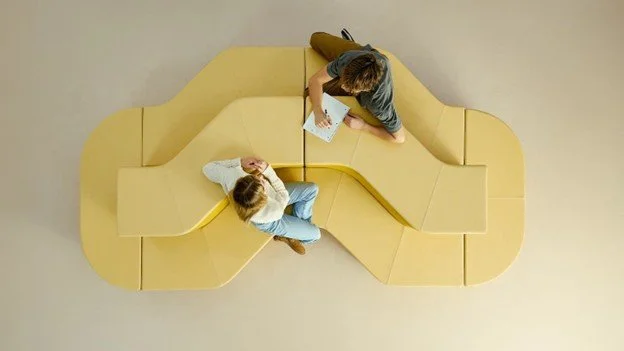
Almost twelve months ago, at the start of 2025, we shared our take on the 5 emerging workplace trends: Adaptable Spaces, Nature’s Touch, Sustainability, Technology Integration, and Immersive Environments.
A lot has happened since then—return-to-office momentum picked up, AI moved from new to a daily tool, energy costs spiked again, and employees made it clear they’ll vote with their feet if the office doesn’t feel worth the commute.
So, how did our predictions hold up? Let’s look at the data, the projects we’ve completed this year, and what clients are actually asking for as we close out 2025.
1. Adaptable Spaces → Correct
What we saw in January turned into a flood. Companies that dragged their feet on flexible layouts in 2024 suddenly had no choice in 2025: 55% of global occupiers now utilize flexible office solutions, with 17% planning to increase their use Global Flexible Office Trends 2025 | Cushman & Wakefield
—either you have adaptable spaces or you’re out.
2. Nature’s Touch (Biophilia) → Correct, but with a twist
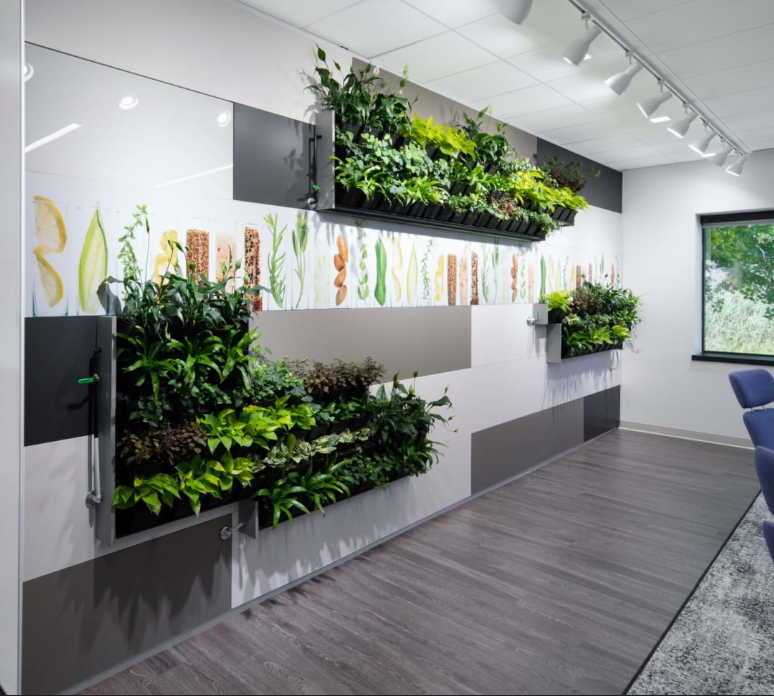
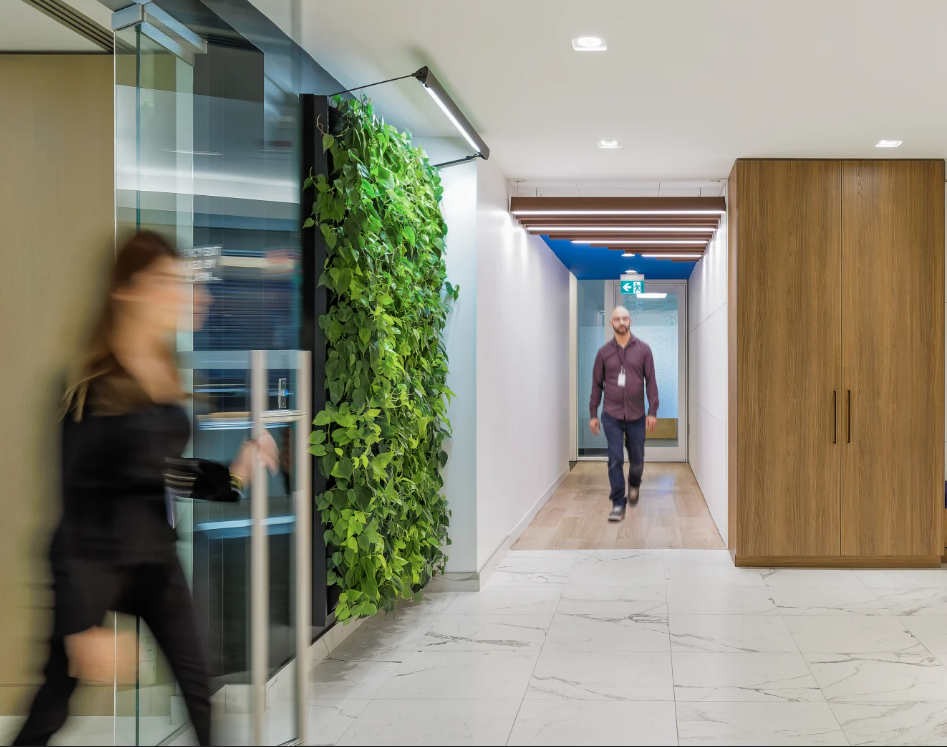
Biophilic design exploded in North America and northern Europe, but adoption was slower in dense markets where outdoor air quality remains a challenge. DIRTT’s Breathe living walls is a cost effective, low-maintenance way to bring the outside in.
The new development in 2025: clients are pairing living walls with air-quality sensors and tying the data to their ESG reports. It’s no longer just “looks nice”—it’s measurable filtration + employee satisfaction + carbon reporting.
3. Sustainability → Correct
We said sustainability was a necessity. It turned out to be the necessity.
Manufacturers are committed to create a better world. This year, DatesWeiser transitioned to MillerKnoll’s multisite FSC chain of custody certificate), reinforcing its commitment to sustainable wood sourcing. By working closely with suppliers, the Supply Management team successfully shifted inventory to FSC-certified materials without compromising quality. As a result, FSC-certified wood purchases at DatesWeiser surged from under 5 percent to 67 percent in just one year! 2025 Better World Report
4. Technology Integration → Correct, AI has changed everything
Occupancy sensors that simply turned lights on and off? Old news.
In 2025, the standard is now technology integration, adaptive controls that learn behavior patterns, and smart lighting ecosystems that respond to people—not the other way around.
A perfect example of this was a recent collaboration with LUMIEN Lighting. The client wanted a space that would truly “wow” guests, showcasing their lighting in key. By integrating DIRTT, AV/data solutions, Mechoshades, and carefully curated furniture, we created a cohesive environment that highlighted LUMIEN’s innovative lighting. The high ceilings and expansive open spaces presented a challenge, but strategic furniture placement, focal walls, and thoughtful circulation ensured the space felt grand without being overwhelmed.
Working closely with LUMIEN, we used renderings, material samples, and showroom visits to help them visualize the possibilities and make confident decisions. The result? A fully integrated, technology-forward environment that not only enhanced the aesthetic of their lighting but also demonstrated how technology integration can create an immersive and adaptive experience for all.
5. Immersive Environments → Correct, the number 1 reason people show up.
We thought sensory design would be important. We didn’t expect it to become the single biggest reason employees cite for wanting to come to the office.
58% of employers surveyed cited cultivating culture and belonging as leading motivators for returning to the office, while 46% emphasized meaningful interpersonal connection. https://www.jll.com/en-us/insights/2025-outlook-on-global-design-trends
Ready to stop guessing and start building the 2026-ready workplace that actually gets people excited to show up?
Let’s talk. The trends we predicted aren’t emerging anymore—they’re here.