
Designing for the Caregiver Experience
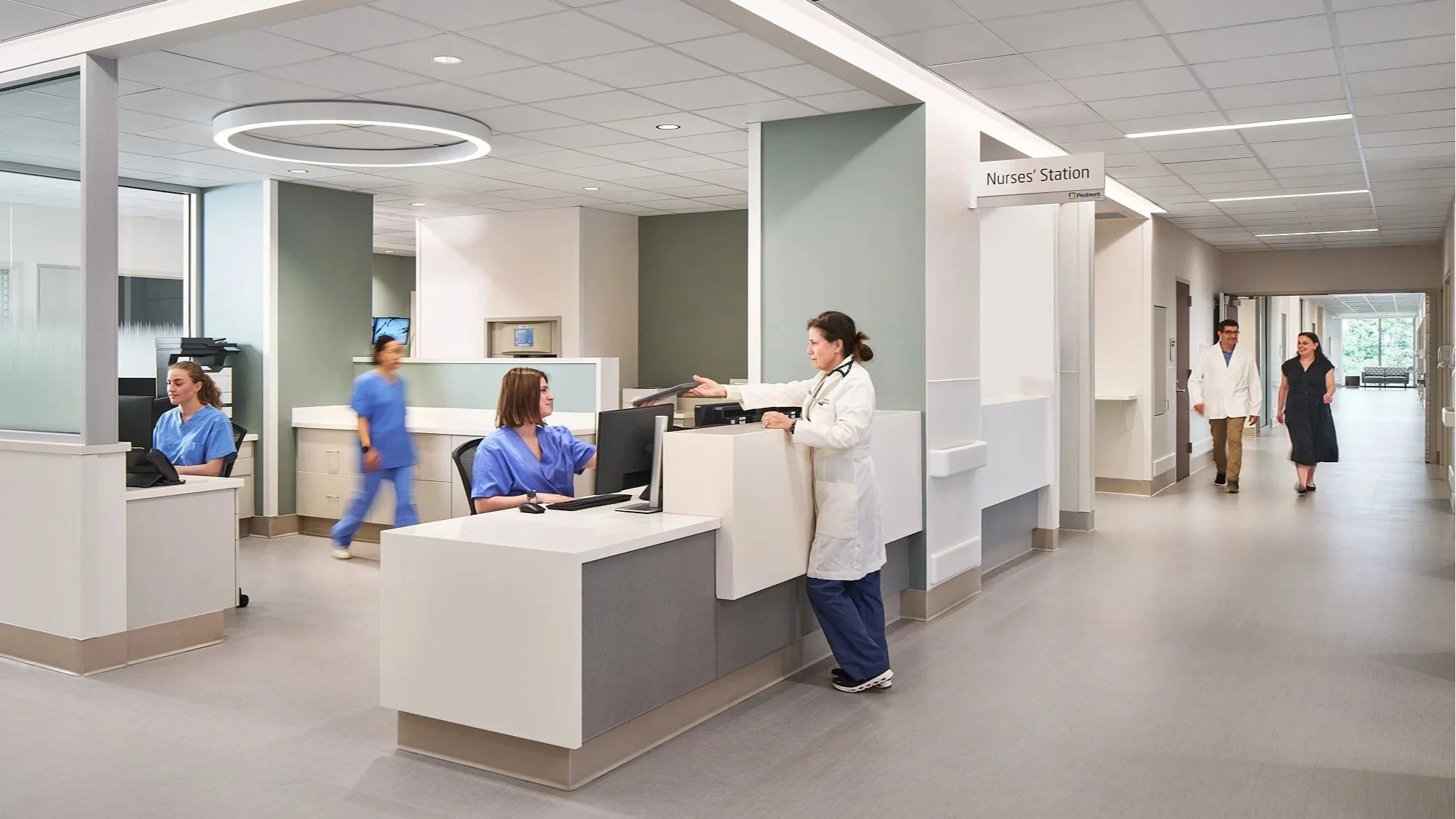
When people think about healthcare design, the conversation naturally centers on the patient. Creating spaces that promote healing will always be the priority, but exceptional healthcare environments are equally dependent on the people delivering that care.
Today's caregivers face longer shifts, increasing patient demands, staffing shortages, and higher levels of physical and mental fatigue than ever before. While no design solution can solve every challenge facing healthcare organizations, thoughtfully planned environments can make a meaningful difference in how caregivers work, collaborate, and recharge.
Supporting the People Behind the Care
Healthcare workers spend much of their day moving between patient rooms, documentation, collaboration, and critical decision-making. Every unnecessary step, awkward workstation, or poorly planned space makes that work just a little harder over the course of a 12-hour shift.
Thoughtful workplace design helps remove those everyday obstacles by supporting the way caregivers naturally work. Ergonomic workstations, adjustable seating, accessible storage, and integrated technology make it easier to move through the day without unnecessary interruptions. Even small improvements to the physical workspace can make a meaningful difference in comfort, efficiency, and long-term wellbeing.
Collaboration Starts with the Environment
Healthcare is built on collaboration. Physicians, nurses, specialists, therapists, and support staff are constantly communicating to coordinate care and make informed decisions.
Because every task is different, no single space can support them all. That's why today's healthcare environments include centralized nurse stations for better visibility, small meeting areas for quick conversations, and private rooms for focused care planning.
The goal isn't to design around one way of working. It's to create flexible spaces that support the natural flow of communication while giving caregivers the right setting for the task at hand and minimizing unnecessary interruptions.
Reducing Fatigue Through Thoughtful Design
Being on your feet all day is only part of what wears caregivers down. Constant interruptions, high cognitive demands, and emotionally challenging situations all contribute to burnout.
Make it stand out
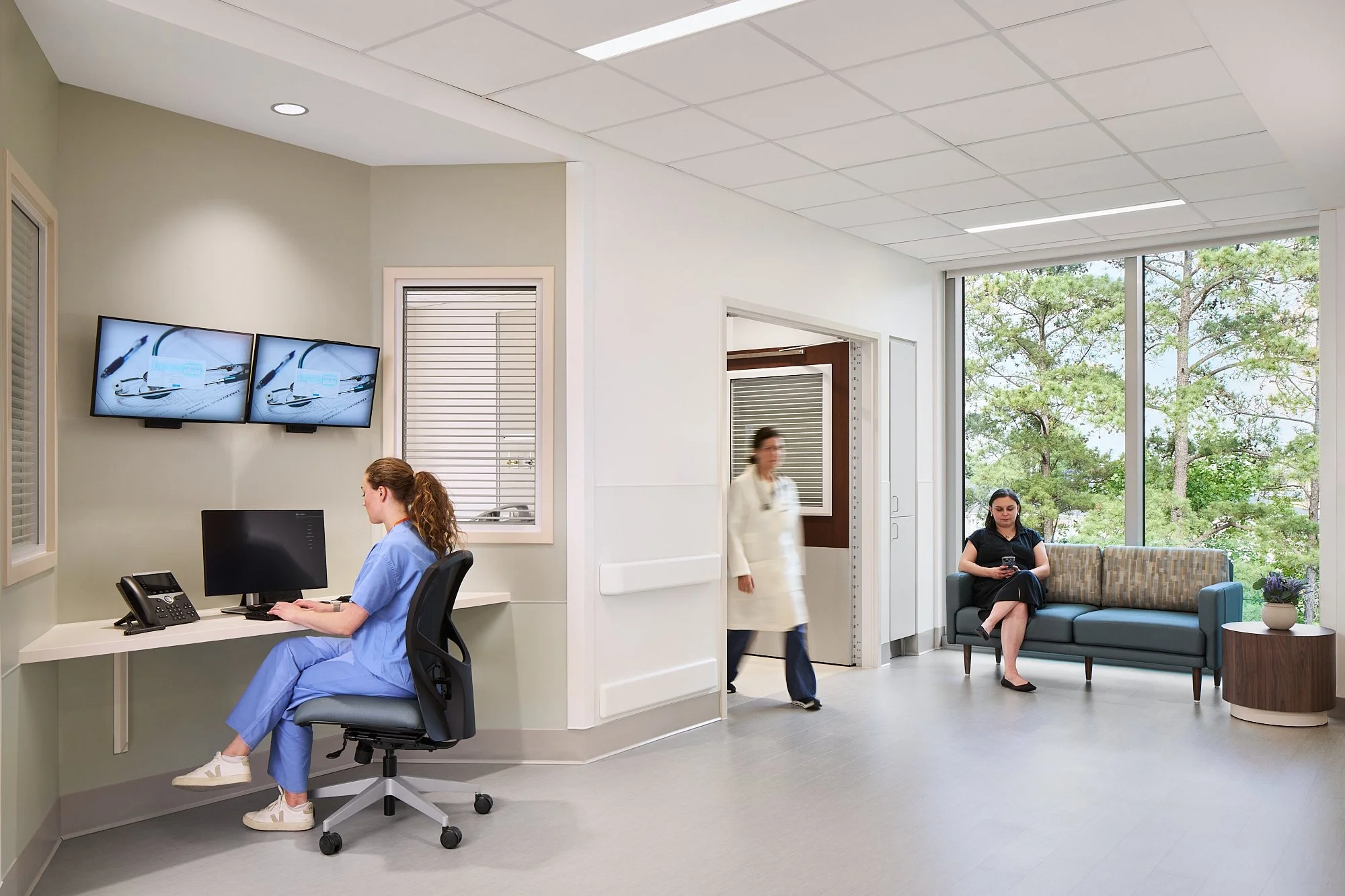
The physical environment can help ease some of that strain. Natural light, quieter spaces, clear wayfinding, and comfortable furniture help reduce stress and improve focus throughout the day. Even a few minutes away from the clinical environment can give caregivers a chance to reset before returning to patient care.
That's why staff respite spaces have become an important part of healthcare planning. Giving caregivers a dedicated place to step away, recharge, and regroup supports their wellbeing and helps them return to their patients ready to provide the best possible care.
Furniture That Works as Hard as Caregivers Do
Furniture plays a larger role in the caregiver experience than many realize. Clinical seating, height-adjustable workstations, collaborative furnishings, lounge areas, and support spaces all influence how comfortably staff can perform their work throughout long shifts. Selecting furniture that prioritizes ergonomics, flexibility, durability, and ease of maintenance helps create environments that adapt to changing needs while supporting caregiver wellbeing.
When furniture is designed around the people using it every day, the workplace becomes more comfortable, more efficient, and ultimately more effective.
Better Spaces Create Better Outcomes
Healthcare organizations continue to invest in technology, clinical innovation, and patient experience. Equally important is investing in the environments where caregivers spend their day. By creating spaces that encourage collaboration, reduce fatigue, support movement, and provide opportunities for restoration, healthcare facilities can improve both the caregiver experience and the quality of care delivered to patients.
At Corporate Environments, we believe healthcare spaces do their best work when they're designed around the people using them every day. If you're planning a new healthcare space or looking to improve an existing one, we'd love to help. Contact us to start the conversation.