
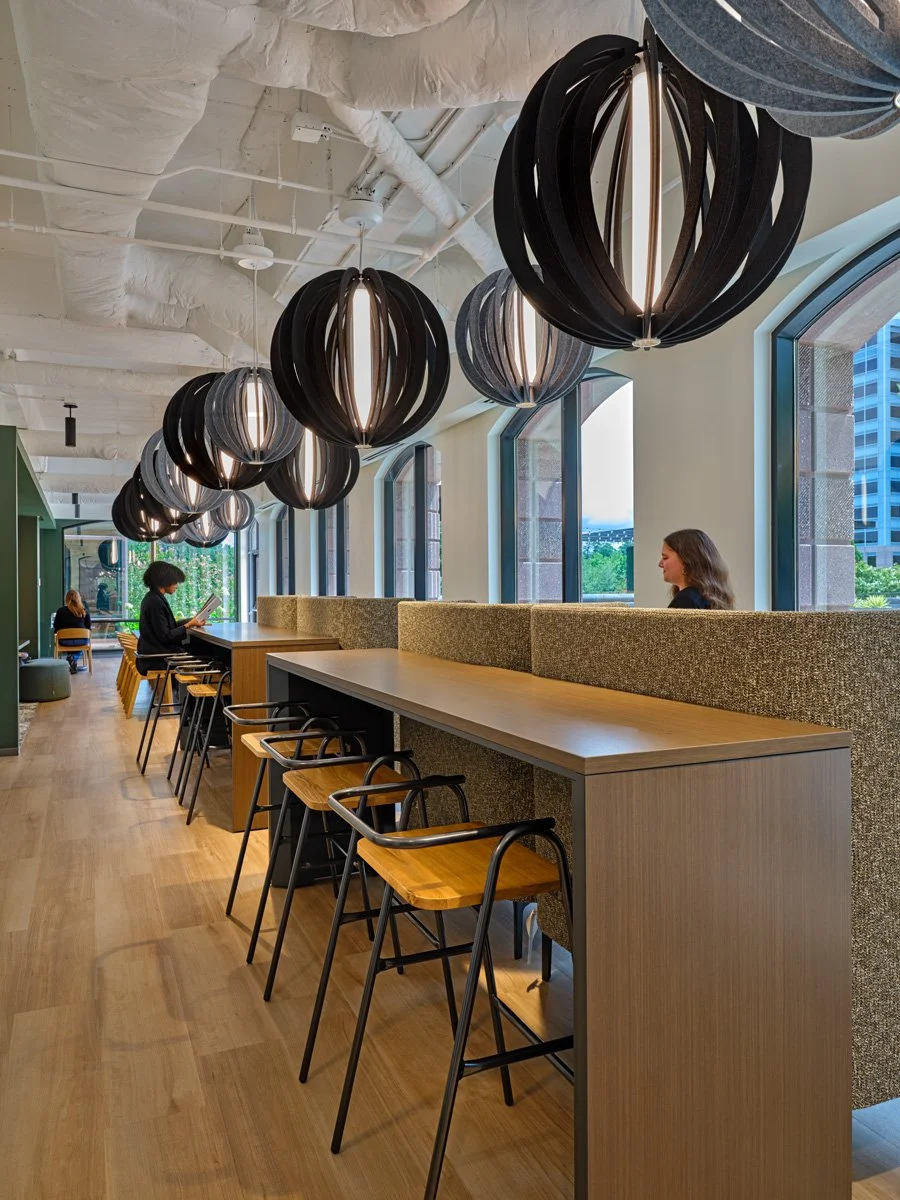
The most visible part of a workplace project is usually the finished space. What people don’t see are the hundreds of decisions, conversations, deliveries, revisions, site conditions, and moving pieces that had to come together before anyone could walk through the doors.
We’ve seen projects with excellent design concepts struggle because no one owned the details between the drawing board and the job site. We’ve also seen complex projects come together remarkably well because the team established a clear plan, communicated consistently, and treated coordination as part of the design not something that happens after the design is finished.
For facilities managers, that distinction matters. A workplace project affects more than furniture. It can influence employee productivity, business continuity, real estate costs, move schedules, and the experience of the people expected to work in the space. The right project management approach keeps those business priorities in focus from the first planning meeting through final installation.
The Project Starts Before Anything Arrives
Successful installations rarely begin with a truck pulling up to the loading dock. They begin weeks or months earlier with planning. A strong project manager looks at the entire picture: scope, drawings, site conditions, lead times, building requirements, access, sequencing, installation requirements, and the client’s operational needs.
That means asking questions that can easily get overlooked:
What has to happen before installation can begin?
Are there building access or loading restrictions?
Which areas need to remain operational?
What materials need to arrive first?
Does the installation sequence align with construction milestones?
Where could a site condition create a delay?
Who needs to approve changes, and how quickly?
For a facility that needs to remain occupied during a renovation, these questions become even more important. A conference room that is unavailable for three days may be manageable. Losing an entire department’s workspace for three weeks is a very different business problem. Planning gives the team an opportunity to identify those risks while there is still time to solve them.
On a complex project, communication cannot depend on someone remembering to send an email when something changes. Designers, general contractors, facilities teams, manufacturers, installers, building management, and other project partners may all be working from different schedules and priorities. Without a central point of coordination, small gaps can quickly become expensive problems.
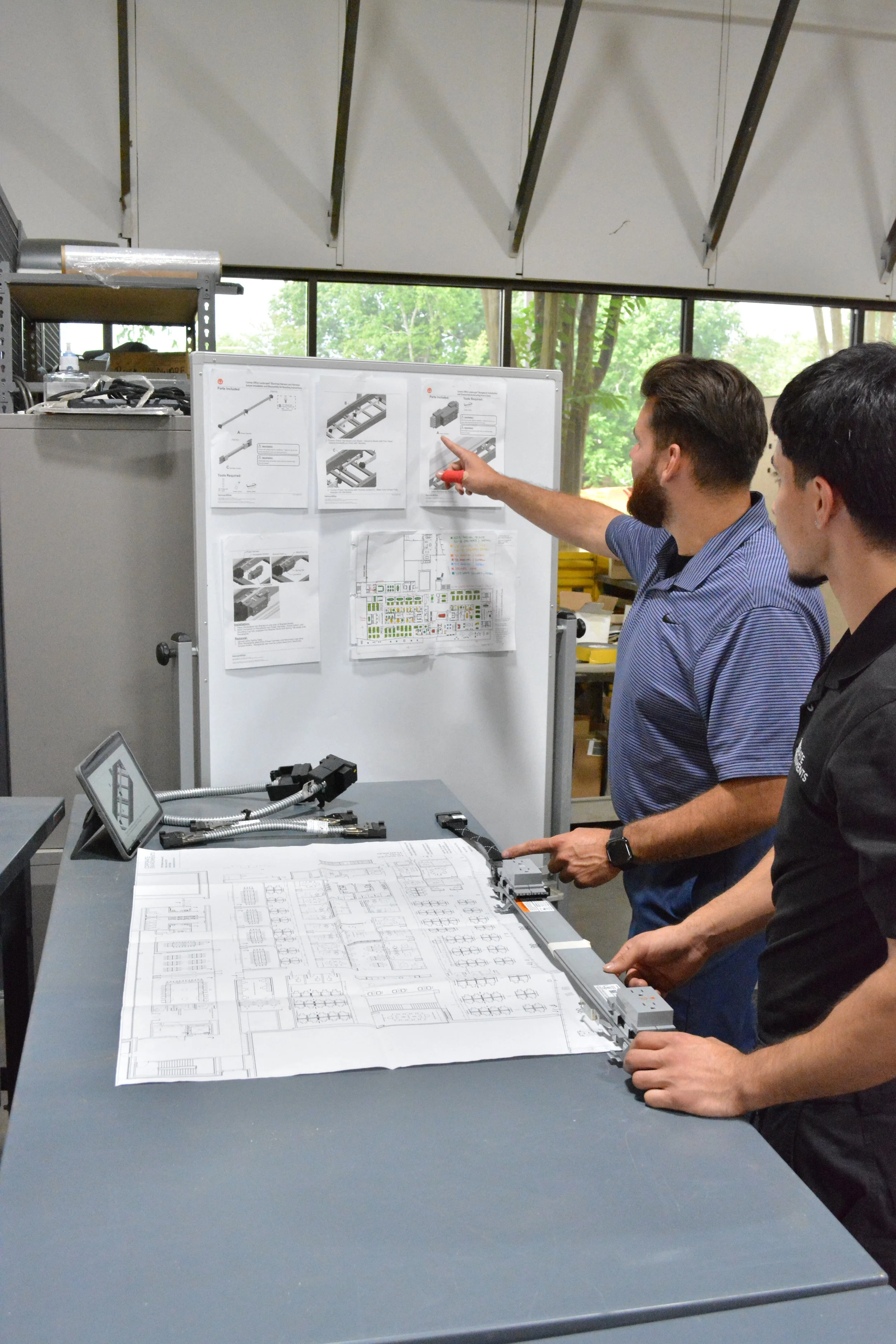
Our project management approach keeps those conversations connected. We track decisions, clarify responsibilities, communicate schedule changes, and keep the appropriate stakeholders informed as the project progresses. That matters when a seemingly minor change affects multiple parts of the project. For example, moving a workstation may change power requirements, impact an installation sequence, affect a delivery, or require an updated drawing. The change itself may be simple. The coordination behind it is not.
One of the biggest misconceptions about workplace projects is that the installation date represents the end of the schedule. In reality, installation is one milestone within a much larger sequence. Materials may need to be released for production, received and inspected, coordinated with construction progress, delivered to the building, staged, installed, adjusted, and inspected. Each step depends on the one before it. A well-managed schedule accounts for those dependencies instead of treating them as separate tasks. It also recognizes that your business has a schedule, too.
If your employees are working in the space, you may need installation to happen after hours or in phases. If you are moving into a new facility, your occupancy date may depend on multiple logistics finishing on time. If you are renovating an active workplace, installation may need to follow construction areas as they become available. The goal isn't simply to finish the installation. It is to build a schedule that supports the way your organization operates. Anyone who has spent time on a job site knows that drawings only tell part of the story. The real environment introduces variables: unexpected site conditions, material that arrived differently than anticipated, limited access, or a room that isn't quite ready when the installation crew arrives. This is where experienced project management earns its value.
Our team coordinates delivery and installation with the broader project schedule, works through site conditions, and keeps issues moving toward resolution rather than allowing them to stall the project. We also believe installation should be treated as part of the client experience, not simply the final task on a checklist. The finished space should be ready for the people who will use it. That means attention to details such as placement, adjustments, punch-list items, and coordination with the client's move or occupancy plan.
A successful workplace project doesn't always look dramatic from the outside. Sometimes success means employees never had to worry about where they would work during a renovation. It means a facilities manager didn't have to spend every morning tracking down three different vendors for an update. It means a delivery arrived when the site was ready instead of sitting in the wrong place for two weeks. Those outcomes require coordination.
When we manage a project from planning through installation, we can connect the pieces that otherwise fall between responsibilities. Instead of asking the client to coordinate designers, manufacturers, installers, deliveries, and project schedules independently, we bring those moving parts into one coordinated process. That turnkey approach gives your team something valuable: fewer things to manage.
Before your next project begins, ask:
Has someone mapped the entire project from design through occupancy?
Is there one clear point of coordination for project questions and decisions?
Does the installation schedule account for construction, building access, deliveries, and your operational needs?
*Installation:** Has the team planned for staging, site conditions, punch-list work, and final adjustments?
Can the project be phased to minimize downtime for employees?
Is someone responsible for connecting all the moving pieces?
Can your project team manage coordination so your facilities team can stay focused on the business?
If several answers are unclear, the project may need more coordination before it needs more products. A successful workplace project isn't defined by how many desks were delivered or how quickly a space was furnished. It is defined by whether the project achieved what the organization needed with as little disruption, uncertainty, and unnecessary cost as possible.
At Corporate Environments, we bring project management, design coordination, specification, installation, and move management together to help clients navigate that process from beginning to end. We understand that your workplace project is happening alongside everything else your organization has to accomplish. If you're planning a new workplace, renovation, relocation, or phased refresh, let's talk about what needs to happen before the first delivery arrives.