

MEALS ON WHEELS ATLANTA
Meals on Wheels Atlanta: Maximizing Mission Impact Through Workplace Strategy
Year: 2020 | Location: Atlanta | Partners: CHOATE & ASD|SKY
When an organization's mission touches thousands of lives each day, every operational decision matters, including in the workplace. Meals on Wheels Atlanta needed a space that could effectively support daily operations, welcome community partners and donors, and extend its mission to promote senior independence throughout the Atlanta area.
Working alongside Meals on Wheels Atlanta, Corporate Environments helped transform their office and event spaces into durable, budget-conscious environments that enhance visitor experiences, support staff productivity, and maximize long-term value. Through creative problem-solving and strategic resource allocation, the project delivered meaningful impact while preserving resources that could be directed back toward the organization's core mission.

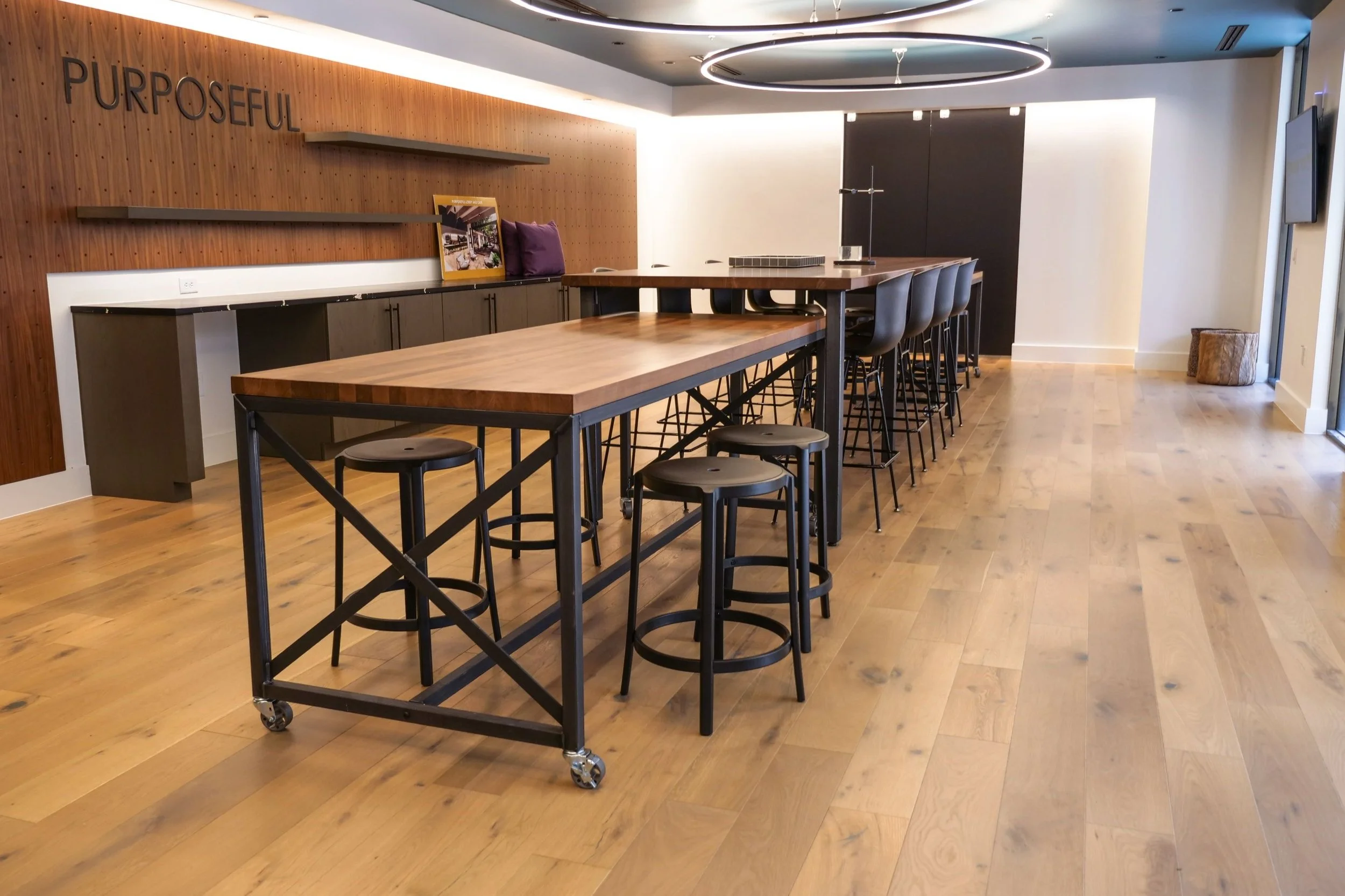
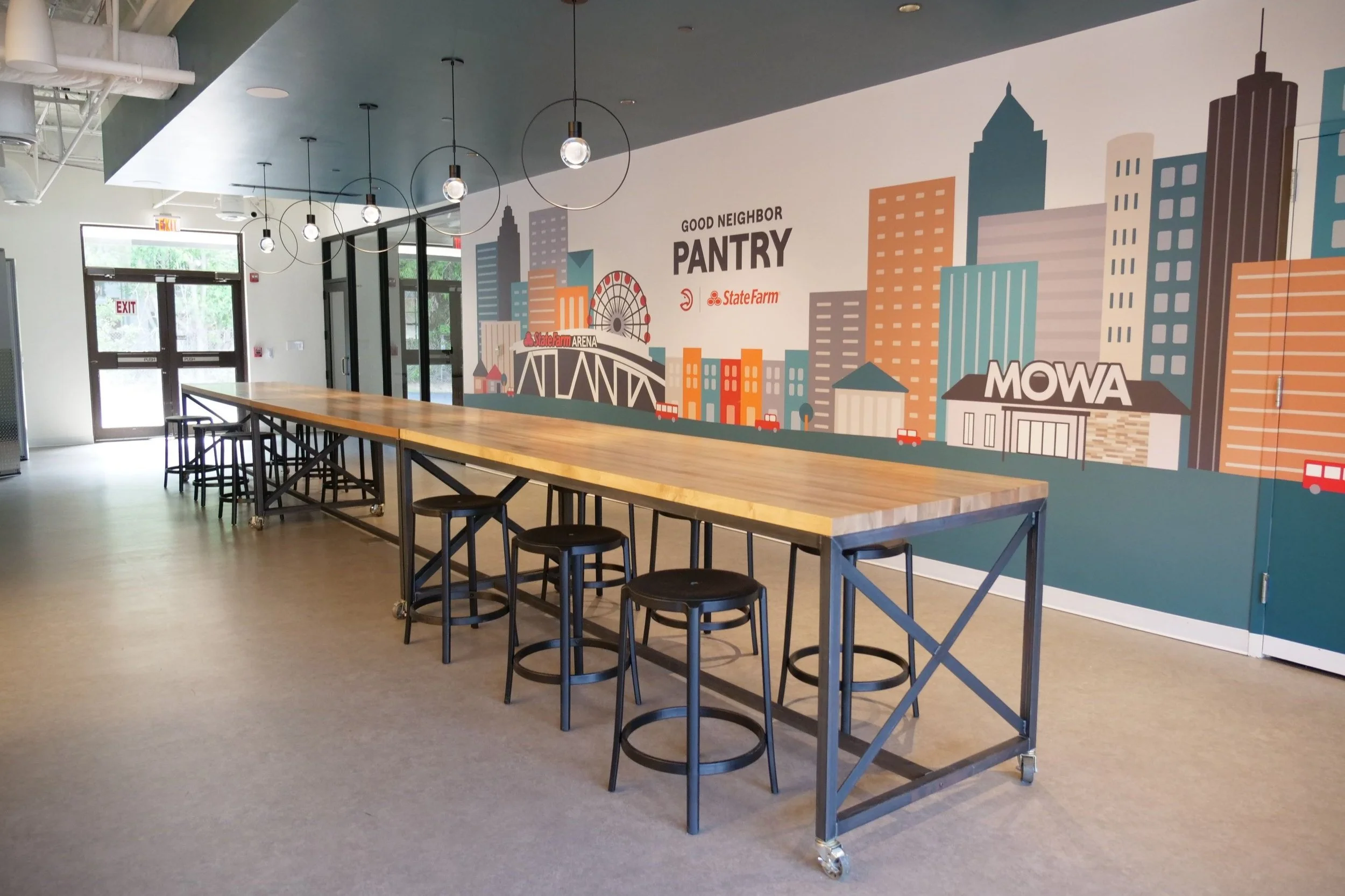
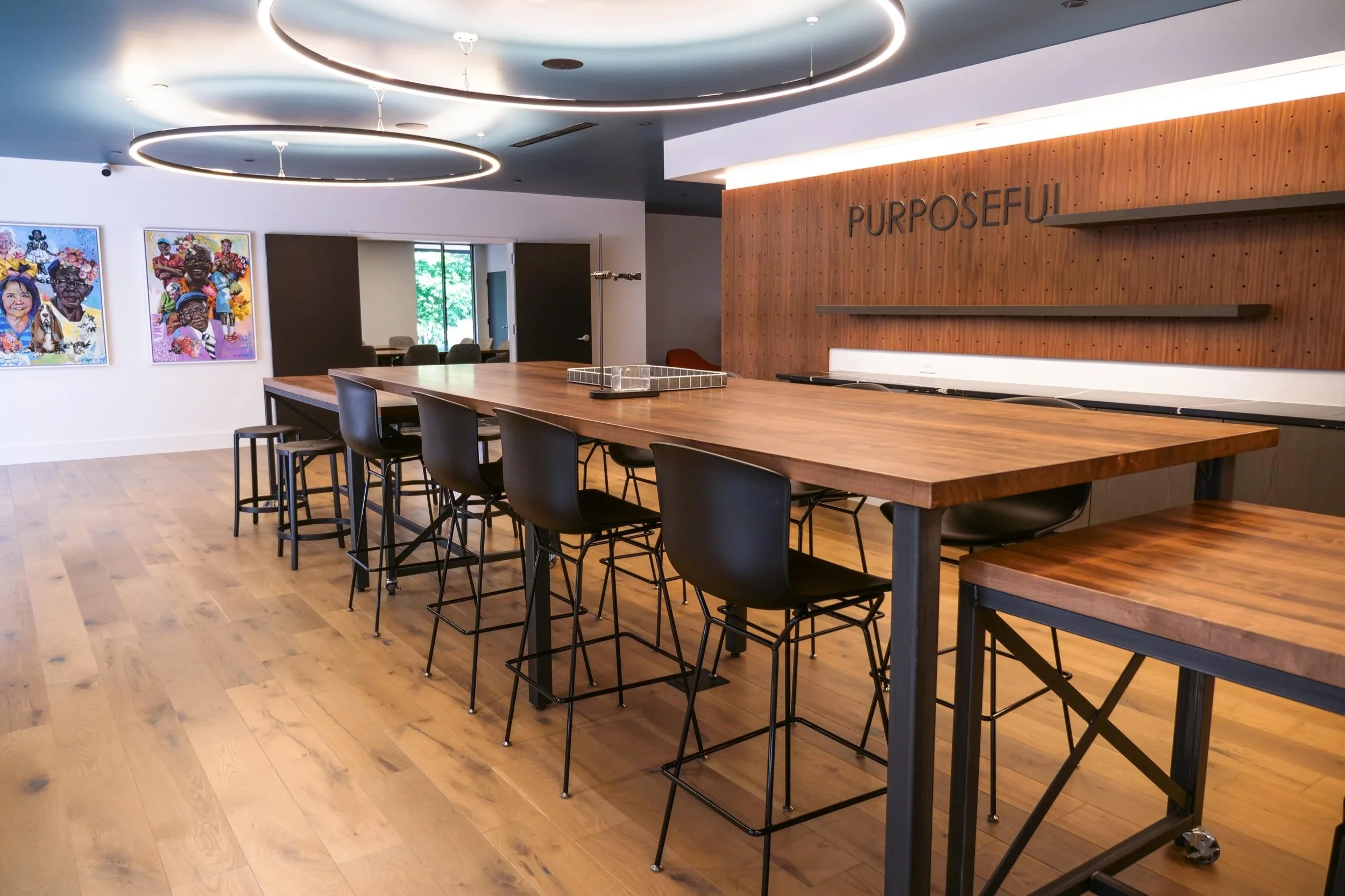
Every day, Meals on Wheels Atlanta delivers more than 1,800 meals to seniors across the region while providing critical support services that foster independence, dignity, and community connection.
As the organization continued to grow its impact, its workplace needed to do more than house employees. The space regularly hosts tours, welcomes donors and community stakeholders, and serves as an event venue that helps advance awareness and engagement. The challenge was creating an environment that reflected the professionalism and importance of the organization's work while remaining practical, durable, and fiscally responsible.
The organization faced several key challenges:
Creating a professional environment that could confidently host visitors, donors, and community partners.
Designing a space durable enough to withstand heavy daily use.
Maximizing the value of every dollar invested.
Improving functionality while maintaining strict budget requirements.
Identifying solutions that would provide long-term performance and reduce future replacement costs.
Corporate Environments partnered closely with Meals on Wheels Atlanta to develop solutions that aligned with both operational needs and financial priorities. Rather than focusing solely on the immediate project scope, the team evaluated opportunities to extend value and preserve resources. Corporate Environments contributed donated inventory from its existing resources, helping reduce project costs while supporting the organization's commitment to directing funding toward community impact. The team also challenged conventional assumptions throughout the design process, looking for opportunities to improve long-term performance rather than simply replicating traditional solutions.
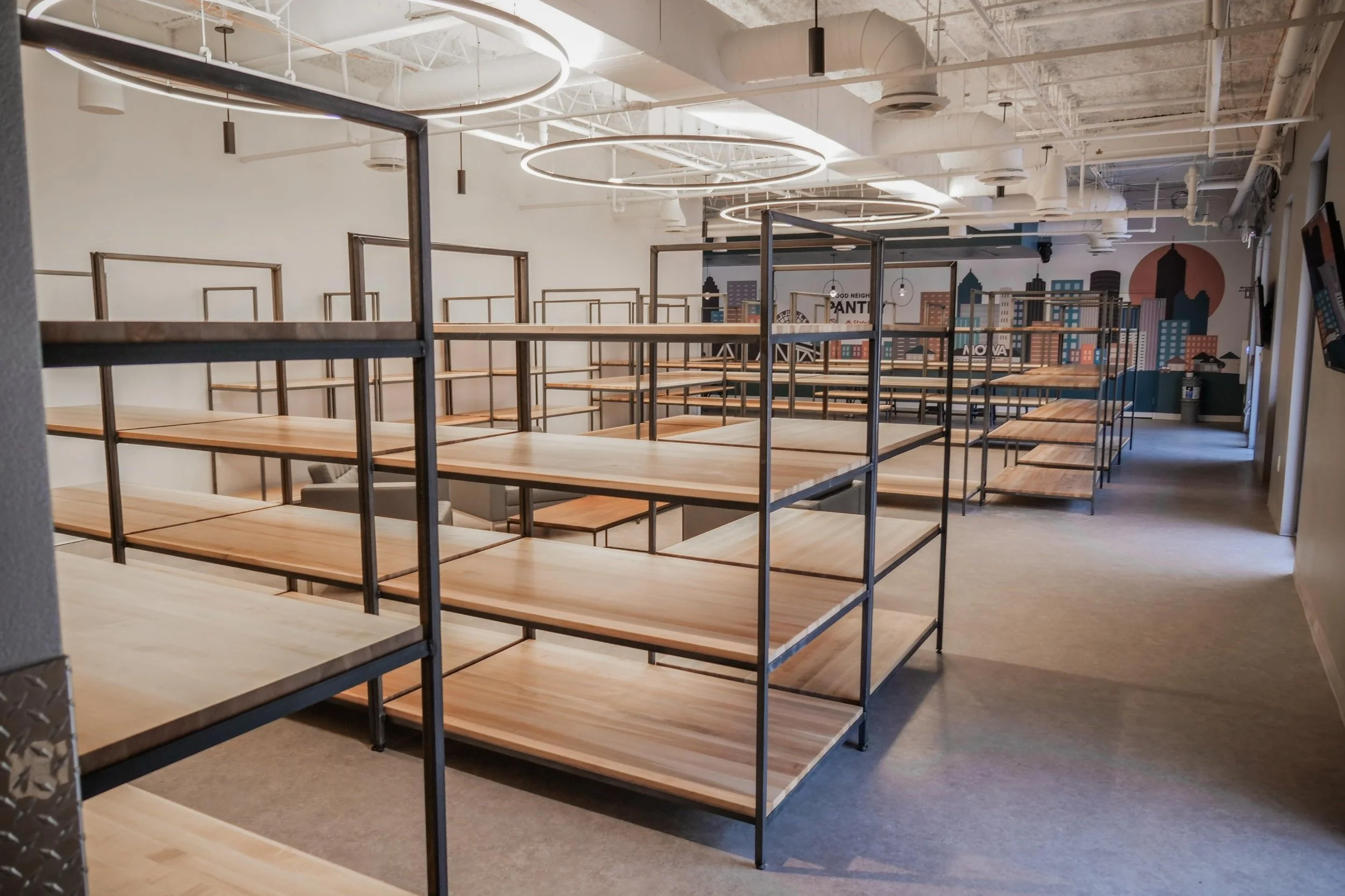
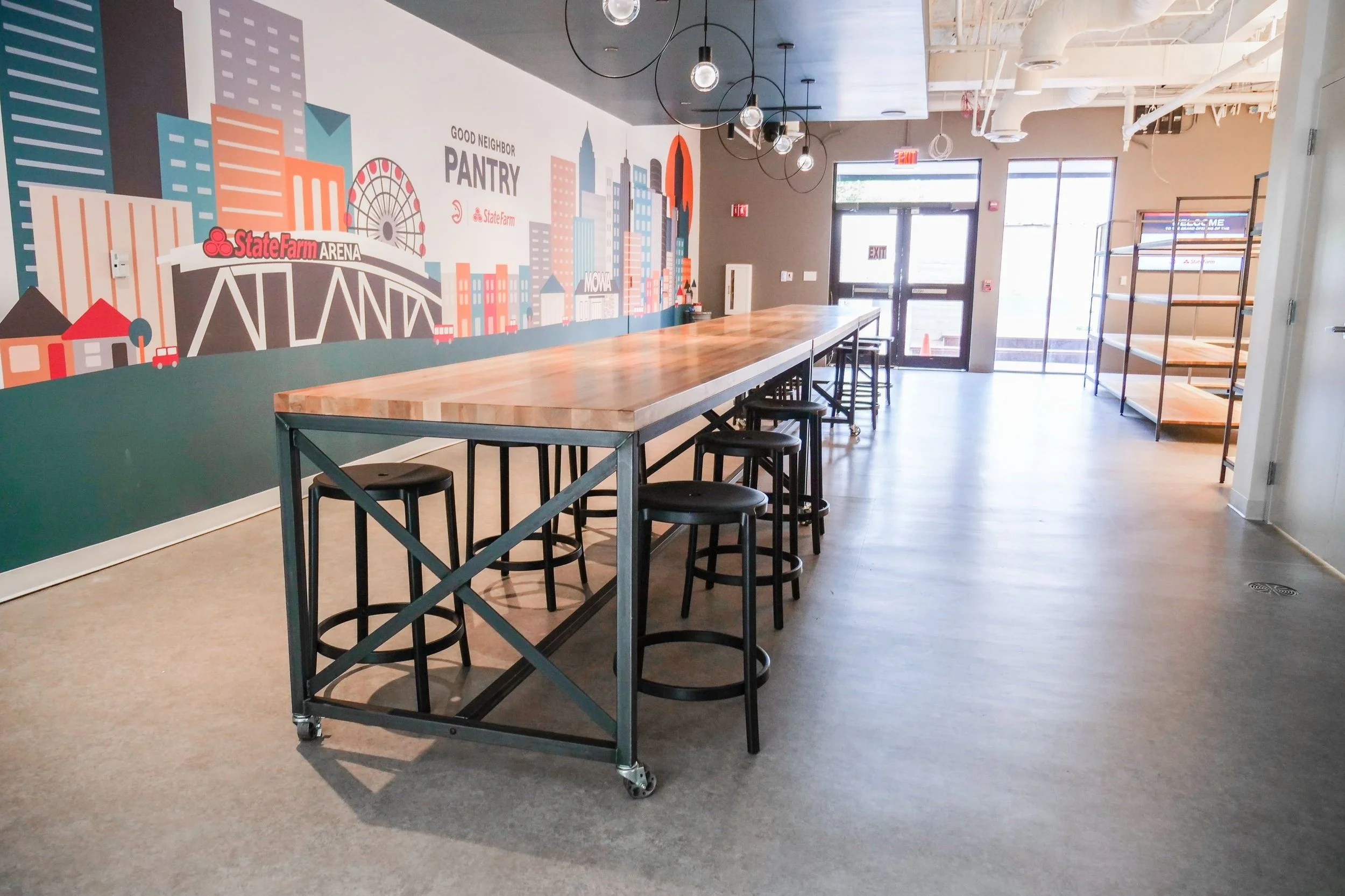
Meals on Wheels Atlanta worked alongside Corporate Environments and project partners to evaluate solutions that balanced aesthetics, durability, functionality, and budget considerations. Together, the team remained focused on a common objective: creating a space that would support the organization's mission for years to come while maximizing the return on every investment. One of the most significant opportunities emerged within the pantry shelving strategy. Rather than implementing a traditional shelving solution, the team recommended a higher-performing butcher block alternative from Iron Age Products.
This approach created measurable long-term advantages:
Extended product lifespan through refinishing and restoration capabilities.
Reduced future replacement costs.
Lower long-term maintenance expenses.
Increased durability for high-traffic, high-use environments.
Greater overall return on investment.
Combined with strategic budget-saving measures, the result was a workplace that delivers both immediate and lasting value. Meals on Wheels Atlanta now operates within a space that supports daily operations, enhances community engagement, and creates a welcoming environment for visitors and stakeholders. Most importantly, resources saved through thoughtful planning and creative solutions can continue supporting the organization's mission of serving seniors throughout Atlanta.
By aligning workplace strategy with organizational goals, the project demonstrates how a thoughtfully designed environment can help nonprofit organizations maximize impact—not only within their walls, but throughout the communities they serve.